
You have the vision for a stunning planted tank, but when you start looking at hardscape materials, the prices at your local fish store can be shocking. A single piece of dragon stone might cost as much as a nice dinner out. For Texas aquarists, the struggle is real: you want that natural, sculpted look without emptying your wallet. The good news is that building a beautiful aquascape on a budget is absolutely possible, especially if you know where to look. This guide will show you exactly how to source affordable aquascaping rocks Texas without sacrificing safety or aesthetics. We will cover everything from local landscaping yards to online marketplaces, ensuring you get the best value for your dollar while keeping your fish safe.
What Makes an Aquascaping Rock Safe and Affordable?
Understanding Rock Composition for Aquariums
Not all rocks are created equal when it comes to aquarium safety. The primary concern is how a rock will affect your water chemistry. Most affordable options are inert, meaning they will not alter your pH or hardness. Rocks like slate, quartz, and lava rock are excellent choices. You want to avoid rocks with high calcium content, such as limestone or tufa, unless you are specifically trying to raise your water hardness. A simple test at home involves dropping a few drops of white vinegar on the rock; if it fizzes or bubbles, it contains calcium and will likely raise your pH.
Why Expensive Doesn’t Always Mean Better
Many high-end aquascaping rocks are priced for their “look” or brand name, not necessarily their quality. A piece of “Seiryu Stone” from a specialty store can be 400% more expensive than a nearly identical piece sourced from a landscape supplier. The secret is that many commercial aquascaping rocks are simply regional stones that have been cleaned and marketed. Understanding this removes the intimidation factor and opens the door to finding identical aesthetics for a fraction of the cost.
Testing Rocks for Sharp Edges and Toxins
Affordable rocks, especially those sourced from outdoors, may have sharp edges that can injure your fish or damage your silicone seals. Always inspect your stones for jagged points and file them down with a concrete rubbing stone. Additionally, you must check for metal content. A rock with visible rust, shiny metallic flakes, or a heavy, metallic smell should be discarded as it can leach copper or iron into your water, which is toxic to invertebrates and sensitive fish.
Where Can You Find Inexpensive Aquascaping Rocks in Texas?
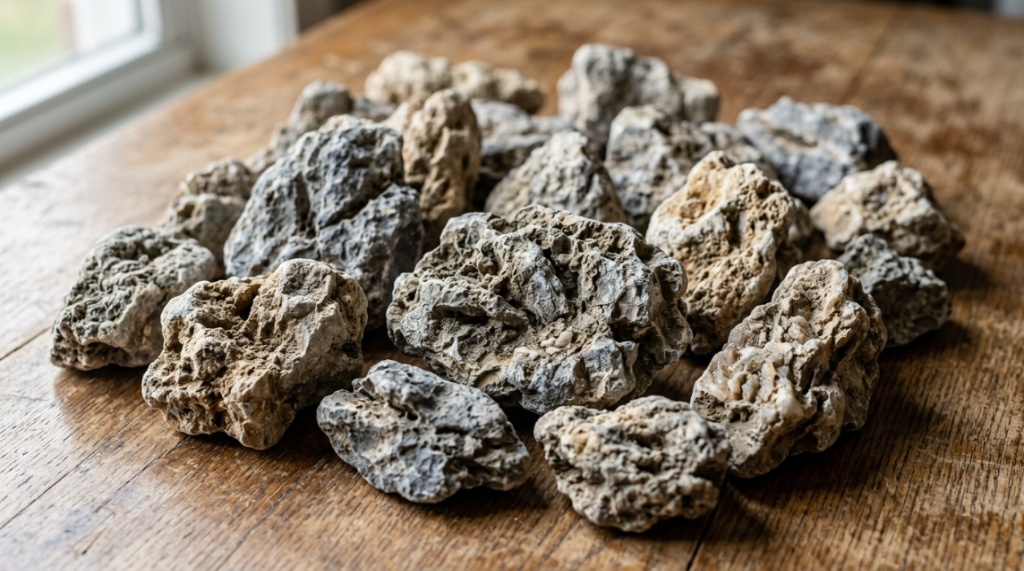
Local Landscape Supply Yards: The Best Kept Secret
Your local landscape supply or gravel yard is the single best place to find affordable aquascaping rocks Texas has to offer. These businesses sell bulk materials like river rock, flagstone, and crushed granite for pennies per pound compared to pet stores. A 50-pound bag of river rock from a landscape yard might cost $10, while the same weight in an aquarium store could cost $80. The key is to bring a bucket and look for pieces with interesting shapes and uniform coloration.
Texas-Specific Quarries and Geologic Zones
Texas is geologically diverse.In Central Texas (Austin/San Antonio area), you can easily find large quantities of Texas limestone and chert. In the Hill Country, look for pink granite or decomposed granite. In East Texas, sandstone is abundant. If you know a local quarry, you can often buy “scrap” or “reject” stone for very low prices. Always call ahead and ask if they allow public access for small bucket loads.
Facebook Marketplace and Craigslist
Do not underestimate the power of local classifieds. People are often trying to get rid of landscape rocks from their yards. Search for terms like “free rocks,” “flagstone,” or “river rock.” You can frequently find entire pickup truck loads of slate or moss rock for free or for a minimal “haul away” fee. This is a zero-cost way to get enough rock for multiple tanks.
Which Types of Rocks Are Most Affordable and Effective for Aquascaping?
Lava Rock: The Budget-Friendly Bio-Filter
Lava rock is incredibly cheap and widely available in Texas. It is porous, which provides a massive surface area for beneficial bacteria to colonize. While it is often reddish or black, it can look very natural in a biotope setup. The downside is that it floats until it is waterlogged, and it can be rough on delicate fish skin. However, for a cichlid tank or a breeding setup, it is unmatched in value.
Texas Slate and Flagstone
Slate is an inert, soft, and easily breakable stone that is perfect for creating terraces and ledges. It chips into flat, stackable pieces, making it ideal for hardscape design. You can find Texas slate at landscape yards for about $0.30 per pound. Because it is soft, you can drill holes in it for planting or cable management. It provides a very modern, clean look in the tank.
River Rock: The Natural Look on a Dime
Smooth river rock is the most common and cheapest hardscape material. It comes in a variety of colors, from grey to brown to speckled. The smooth texture is safe for bottom-dwelling fish like loaches and corydoras. The downside is that river rock can sometimes be difficult to stack without falling, so you may need to use aquarium-safe silicone to secure your structure, Once you have arranged your affordable hardscape, you can Get Lush Underwater Plants Without Spending Much to complete your stunning biotope layout.
How Do You Prepare and Clean Rocks from the Wild or Landscape Yards?
Step 1: The Initial Wash
Begin by scrubbing your rocks vigorously with a stiff-bristled brush under hot running water. Do not use soap or any cleaning agents. Soap residue is nearly impossible to rinse out completely and can kill your fish. You are aiming to remove loose dirt, sand, and debris that may be harboring organic matter.
Step 2: The Boiling and Bleaching Debate
The safest method to sterilize rocks is boiling. Place the rock in a pot of water and boil for 10–15 minutes. Warning: Never boil a rock that is wet inside or has pockets of air; it can explode. If you cannot boil the rock, you can soak it in a 10% bleach solution (1 part bleach to 9 parts water) for 24 hours. After bleaching, soak the rock in clean, dechlorinated water for another 48 hours to remove all bleach traces.
Step 3: The Final Acid Test
After cleaning, perform a final vinegar test. Pour white vinegar over the rock. If you see any fizzing, the rock is not inert and should be used with caution. If you see no reaction, the rock is safe for general community tanks. For sensitive species like Discus or Caridina shrimp, consider only using rocks that have passed this test with zero reaction.
Can You Use Texas Limestone in a Freshwater Aquarium?
The Effect on pH and Hardness
Yes, you can use Texas limestone, but you must understand its properties. Limestone is primarily calcium carbonate. As it dissolves very slowly in water, it will raise both your pH and General Hardness (GH). This makes it excellent for African Cichlid tanks (which require hard, alkaline water) but terrible for soft water fish like Amazonian tetras or plants that prefer soft water.
Pros and Cons of Using Limestone
Pros: It is extremely cheap and abundant in Texas. It creates a beautiful, jagged appearance. It helps buffer high pH.
Cons: It can cause water parameters to swing. It is not suitable for planted tanks unless you are using hard-water plants like Anubias. It can also become covered in a white, crusty residue over time if your CO2 levels fluctuate.
Best Practices for Using Limestone
If you choose limestone, pair it with a strong CO2 injection system to help neutralize the pH increase. Use it sparingly as an accent rock rather than the main substrate or structure. Monitor your pH weekly to ensure it stays within the safe range for your livestock.
How to Stack and Glue Rocks Without Breaking the Bank
Using 100% Silicone for Stability
The cheapest and safest adhesive for stacking rocks is 100% silicone aquarium sealant. It is non-toxic once cured and provides a very strong bond. Apply a bead of silicone to the bottom of a dry rock and press it onto another dry rock. Allow it to cure for 24–48 hours before adding water. This prevents rock slides that can crack the glass of your aquarium.
Friction Stacking for Easy Re-Scaping
Not every rock needs to be glued. If you are placing flat rocks on top of each other (like slate), you can use the “friction stack” method. Ensure the base rock is level and heavy. Stack the next rock so it is leaning slightly backward against the glass or another rock. This allows you to easily change your aquascape layout without damaging the silicone.
Using Lava Rock as a Base Layer
To save money on visible rocks, use a hidden base layer of cheap lava rock. Build a foundation using large pieces of lava rock that will be hidden behind the substrate. Then, place your more expensive or aesthetic stones on top of this base. This provides height and structure without requiring large, costly pieces of show stone.
What Is the Difference Between Landscaping Rock and Aquarium Rock?
Safety and Toxicity
Landscape rock is typically safe for aquariums, but there is a higher risk of contamination. Landscape yards may store rocks near industrial chemicals, fuel spills, or pesticides. Always wash and test thoroughly. Aquarium rock is specifically quarried and processed to ensure it is free from heavy metals and sharp edges, which is why it costs more.
Sizing and Shape
Landscape rock is often sold by weight, meaning you usually get a mix of sizes in a bag. This is actually a benefit for aquascaping, as you get a natural variety. Aquarium rock is usually sold by the piece, allowing for precise matching but leading to higher costs per inch.
| Feature | Landscape Rock | Aquarium Rock |
|---|---|---|
| Cost Per Pound | $0.10 – $0.50 | $2.00 – $8.00 |
| Variety of Sizes | Mixed (good for filling) | Uniform (good for design) |
| Cleaning Required | High (dirt, debris, chemicals) | Low (usually pre-washed) |
| Risk of Sharp Edges | Medium to High | Low |
| Availability | High (local yards) | Low (specialty stores) |
Why Should You Avoid Painted or Dyed Rocks?
The Risk of Toxin Leaching
Many “decorative” rocks sold at craft stores or big box retailers are painted with industrial paints or sealed with epoxy. In an aquarium environment, these paints can peel, chip, or leach toxic solvents into the water. This can cause sudden fish death or long-term health problems. Always look for natural, uncoated stones.
Aesthetic Dissatisfaction
Painted rocks almost always look artificial. They fade over time or become covered in algae in a way that looks unnatural. A real, uncoated rock will develop a beautiful patina of beneficial algae and biofilm over time, creating a much more attractive and mature look that enhances the realism of your aquascape.
Cost vs. Value
Dyed or painted rocks are often more expensive than natural stones because of the manufacturing process. You are paying for a layer of paint that offers no benefit to your aquarium inhabitants. Sticking with natural, unprocessed stones provides better value and peace of mind.
How Many Pounds of Rock Do You Really Need for Your Tank Size?
The General Rule of Thumb
A standard rule for aquascaping is 1 to 1.5 pounds of rock per gallon of water. For a 20-gallon tank, you would need roughly 20–30 pounds of rock. For a 55-gallon tank, aim for 60–80 pounds. This provides enough mass for a strong visual structure and adequate biological filtration surface area.
Adjusting for Tank Dimensions
Tanks that are tall and narrow require more rock to create depth, while long, shallow tanks can get away with less. If you have a 40-gallon breeder tank (which is long and shallow), 40 pounds of rock will look substantial. If you have a 40-gallon tall tank, you might need 50–60 pounds to fill the vertical space.
Sourcing the Right Quantity
When buying from a landscape yard, bring a 5-gallon bucket. A full 5-gallon bucket of rock typically weighs between 45 and 50 pounds depending on the density of the stone. This makes it easy to estimate how much to buy. Remember: It is better to have a few extra rocks than to be short; you can always store extras for future rescapes.
For a curated list of specific stores and online vendors that specialize in budget-friendly hardscape, including pricing comparisons for Texas residents, check out this resource on affordable aquascaping rocks Texas to see top-rated options verified by the local community.
Frequently Asked Questions
Can I use rocks from my backyard in Texas?
Yes, but you must test them first. Perform the vinegar test to check for calcium. Boil the rock to sterilize it. Avoid rocks from areas that may have been treated with pesticides or fertilizers.
How do I know if a rock is aquarium safe?
The most reliable test is the vinegar test. If the rock fizzes when you drop vinegar on it, it contains calcium and will alter your pH. If it does not fizz, it is likely inert and safe for most community tanks.
Is lava rock good for planted tanks?
Yes, lava rock is excellent for planted tanks. You can attach mosses or anubias to it using super glue or fishing line. Its porous nature holds beneficial bacteria, which helps keep the water clean for plants.
Can I mix different types of rocks?
Absolutely. Mixing rock types can create a very natural look, especially if you choose stones with similar color temperatures (e.g., all greys or all browns). Just ensure all rocks are inert if you are keeping soft-water fish.
How long do rocks affect water chemistry?
Calcareous rocks (like limestone) will continue to buffer the water until they are removed or fully dissolved. Inert rocks (like slate or quartz) affect the water only in terms of surface area for bacteria; they do not change pH or hardness.
What is the cheapest way to get large rocks?
Check Facebook Marketplace or local landscape supply yards. Often, large “trophy” stones that are too heavy for gardens are given away for free. You just need to handle the transport and cleaning yourself.
Conclusion
Building a beautiful aquascape in Texas does not require a second mortgage. By shifting your mindset from “expensive pet store brands” to “geological materials,” you unlock a world of affordable, high-quality options. Local landscape yards, riverbeds (where legal), and online marketplaces are your best friends. The key steps are simple: identify inert materials using the vinegar test, clean them thoroughly, and use cheap adhesives like silicone to build your structure. You have gained the knowledge to save 50-80% on your hardscape budget. Stop overpaying for rocks in fancy boxes. Your dream tank is waiting—grab a bucket, find some local stone, and start building today.





+ There are no comments
Add yours