
Dog bite safety tips are practical steps that reduce the risk of being bitten by a dog at home or in public. They matter because dog bites are common, preventable, and often serious. According to global public health data, tens of millions of people are bitten by dogs every year, with children accounting for a large share of injuries. Most bites don’t come from “aggressive” dogs. They come from normal dogs reacting to fear, pain, guarding behavior, or misread human actions.
This guide explains how dog bites happen, what research and case studies show, and exactly what to do to avoid bites in daily life. You’ll learn how to read dog body language, behave safely around familiar and unfamiliar dogs, protect children, and reduce risk inside your own home. Each section starts with a clear answer, then goes deeper with real-world examples and facts. The goal is simple: fewer bites, safer homes, and calmer public spaces.
Why do dogs bite people in the first place?
Short answer: Dogs bite when they feel threatened, scared, startled, or when their boundaries are ignored.
Dog bites are rarely random. Studies of hospital bite records consistently show common triggers:
- Fear or anxiety (loud noises, sudden movement)
- Territorial behavior (guarding food, toys, beds)
- Pain or illness (arthritis, ear infections)
- Protecting puppies or owners
- Rough or inappropriate handling, especially by children
A well-known case review of pediatric dog bites found that over 60% occurred at home with a dog the child already knew. This matters because it shifts the focus from “dangerous dogs” to unsafe interactions. Prevention works when people understand dog behavior, not when they rely on stereotypes.
How can you read warning signs before a dog bites?
Short answer: Dogs usually warn before biting through body language.
Dogs communicate discomfort clearly, but many people miss the signals. Key warning signs include:
- Stiff body posture or frozen movement
- Whale eye (white of the eyes visible)
- Ears pinned back or tightly forward
- Growling, snarling, or snapping
- Tail held high and stiff or tucked tightly
Case studies from animal behavior clinics show that bites often occur after multiple ignored warnings. For example, a dog growls when hugged, the person laughs and continues, and the dog escalates to biting. Recognizing early signs is one of the most effective dog bite safety tips because it allows you to disengage before things escalate.
How should you behave around unfamiliar dogs in public?
Short answer: Give space, avoid sudden movement, and never assume friendliness.
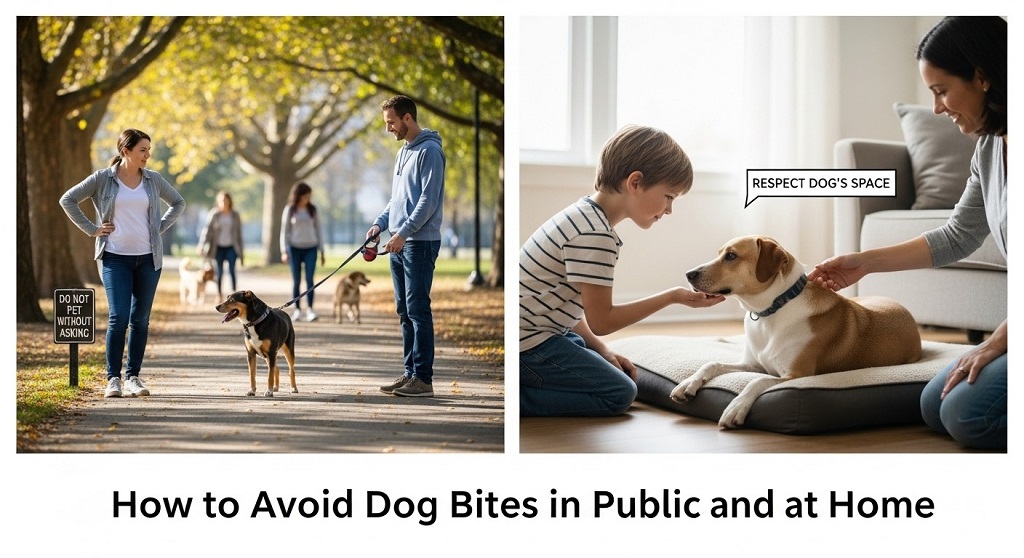
Public places like parks, streets, and apartment corridors are common bite locations. Follow these rules:
- Do not approach a dog without the owner’s permission
- Avoid direct staring, which dogs may see as a challenge
- Let the dog sniff you only if the owner says it’s okay
- Stand sideways, hands relaxed, voice calm
If a loose dog approaches you, stop moving. Keep your arms close to your body. Avoid running. Data from postal worker injury reports shows that standing still and avoiding eye contact reduces escalation in most encounters.
What should you do if a dog acts aggressively?
Short answer: Stay calm, protect your face, and slowly create distance.
Aggression does not always mean an attack is coming, but your response matters. Best practices include:
- Do not scream or flail your arms
- Back away slowly without turning your back
- Use an object (bag, jacket) as a barrier if needed
In documented bite-prevention programs, people trained to remain still and avoid panic had fewer injuries compared to those who ran. Panic increases chase instinct, especially in high-arousal dogs.
How can you prevent dog bites inside your own home?
Short answer: Set boundaries, manage resources, and supervise interactions.
Most bites happen at home. Prevention starts with structure:
- Do not disturb dogs while eating or sleeping
- Teach “no hugging” and “no face-to-face” rules
- Use baby gates or crates for rest time
Behavioral research shows that dogs given predictable routines and quiet spaces show lower stress markers. Reduced stress equals lower bite risk. This is as practical as household safety habits like locking cabinets or securing furniture—similar to planning purchases wisely, whether you’re childproofing or even shopping strategically for unrelated items like king bedroom sets clearance deals. Structure reduces risk.
How should children be taught dog bite safety tips?
Short answer: Teach simple rules early and supervise at all times.
Children are at higher risk due to size, behavior, and lack of awareness. Effective rules include:
- Ask before touching any dog
- No pulling ears, tails, or fur
- Leave dogs alone when sleeping or eating
A multi-country case study on child dog bite prevention showed a 40% reduction in incidents after schools introduced short, repeated safety lessons. Education works when it’s consistent and age-appropriate.
Does dog training reduce bite risk?
Short answer: Yes, when combined with owner education.
Training improves communication, not just obedience. Dogs trained with positive reinforcement show fewer stress behaviors linked to biting. However, studies also note that owner behavior matters more than commands. A trained dog can still bite if humans ignore signals or push boundaries.
Focus on:
- Socialization during puppyhood
- Reward-based training
- Regular veterinary checkups to rule out pain
What role does supervision play in preventing dog bites?
Short answer: Supervision is the strongest protective factor.
Reviewing hospital data reveals a clear pattern: unsupervised interactions lead to more severe injuries. Even familiar dogs can react unpredictably. Active supervision means watching body language, not just being in the same room.
What should you do immediately after a dog bite?
Short answer: Clean the wound and seek medical advice.
Immediate steps include:
- Wash the wound with soap and running water for 15 minutes
- Apply antiseptic
- Seek medical care, especially for deep wounds
Prompt care reduces infection risk significantly. Medical case reviews show early treatment lowers complications and recovery time.
Conclusion
Dog bites are not random events. They follow patterns. When people learn dog bite safety tips, read warning signs, and set clear boundaries, injuries drop. Public spaces become calmer. Homes become safer. The data is consistent across regions and age groups.
Prevention does not require fear or extreme measures. It requires awareness, supervision, and respect for animal behavior. Whether you are walking in a park, visiting friends, or raising a child with a family dog, small actions matter.
Take action now: Share these tips with your family. Teach children the basics. Adjust routines at home. Prevention starts today, and the impact lasts a lifetime.
FAQs
Can friendly dogs still bite?
Yes. Friendly dogs can bite if stressed, in pain, or if their boundaries are ignored.
Are certain breeds more likely to bite?
No. Research shows behavior and environment matter more than breed.
Should you pet a dog that wags its tail?
Not always. Tail wagging can signal excitement or stress. Look at the whole body.
How can parents reduce dog bite risk at home?
Supervision and rules. Never leave young children alone with dogs.
Do neutered dogs bite less?
Often, yes. Studies link neutering with reduced aggression in many dogs.
What age group is most at risk?
Children under 10. They account for a high percentage of facial injuries.
Is dog bite prevention training effective?
Yes. Education programs show measurable reductions in bite incidents.
Related Topics: Clothing Design Steps From Sketch to Stitch in 6 Easy Stages
Related Topics: Royal Love Chair Furniture Design Secrets








+ There are no comments
Add yours