
Setting up mechanic tools for a home garage is the fastest way to save money on repairs, reduce downtime, and handle routine vehicle maintenance without depending on workshops. Many beginners buy tools randomly. The result? Missing essentials, wasted budget, and cluttered workspaces that slow every task.
A structured home garage setup solves this problem. When tools are selected based on real repair needs and arranged logically, even basic maintenance like oil changes, brake pad replacement, and battery servicing becomes easier and safer.
According to a 2024 AAA maintenance study, vehicle owners who perform routine DIY servicing save between $300 and $900 annually on average compared to full-service workshop users. That makes a practical garage tool setup not just convenient—but financially smart.
This guide explains how to choose the right tools, organize them efficiently, and build a reliable workspace step by step using a proven framework that works for beginners and intermediate DIY mechanics alike.
What Are the Essential Mechanic Tools for a Home Garage Setup?
Short answer: Start with a socket set, wrench set, screwdrivers, pliers, jack, jack stands, torque wrench, and work light. These handle over 70% of common car maintenance tasks.
The biggest mistake beginners make is buying advanced tools first. Instead, build a foundation kit that supports routine maintenance.
Core starter tool checklist
- Metric and SAE socket set
- Combination wrench set
- Screwdriver set (flathead and Phillips)
- Slip-joint and needle-nose pliers
- Hydraulic floor jack
- Jack stands
- Torque wrench
- Rubber mallet
- Magnetic parts tray
- Portable LED work light
These tools allow oil changes, filter replacements, brake servicing, battery swaps, spark plug replacement, and basic suspension checks.
Why Should You Set Up Mechanic Tools Properly in a Home Garage?
Short answer: Proper setup reduces repair time, prevents tool loss, improves safety, and increases efficiency.
A disorganized garage creates friction in every repair process. Tools go missing. Bolts get misplaced. Jobs take longer than necessary.
A structured setup solves these problems by creating a workflow zone:
- Fast access to frequently used tools
- Clear repair workspace
- Reduced risk of injury
- Better maintenance accuracy
- Improved long-term tool lifespan
Case example: A DIY mechanic survey from GarageJournal (2023) showed that organized home garages reduced average repair time by 28% compared to unstructured setups.
How Much Space Do You Need to Set Up Mechanic Tools for a Home Garage?
Short answer: A single-car garage with 150–250 square feet is enough for a functional tool setup.
You do not need a professional workshop-sized area. Even compact garages can support efficient layouts.
Minimum workspace zones
- Vehicle service zone
- Wall-mounted storage zone
- Workbench area
- Mobile tool cart space
Vertical storage saves the most room. Pegboards and wall racks allow tool access without crowding the floor.
How Do You Choose the Right Storage System for Mechanic Tools?
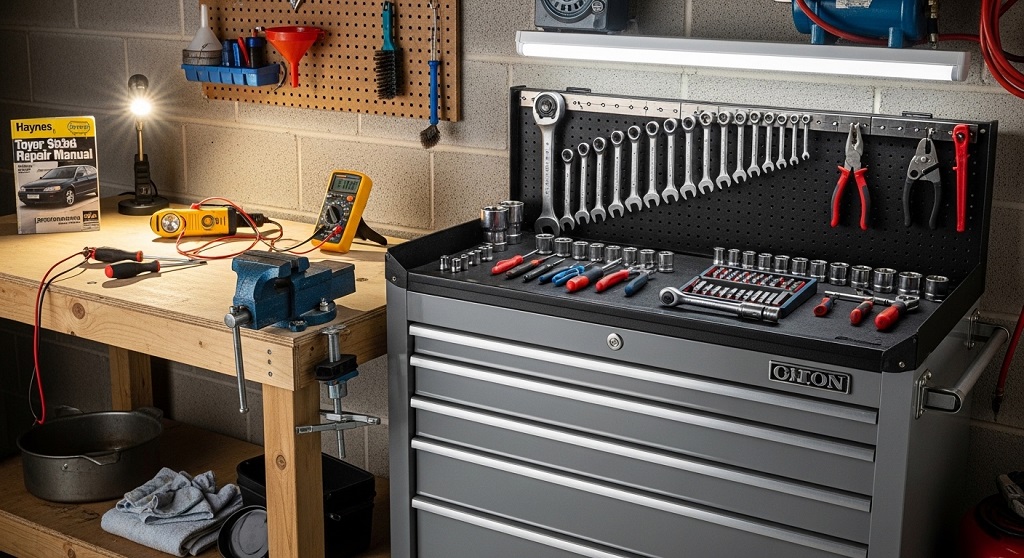
Short answer: Use a combination of tool chests, pegboards, shelves, and drawer organizers.
Storage determines how efficient your garage becomes over time.
Recommended storage layout
| Storage Type | Best For |
|---|---|
| Tool chest | Hand tools and sockets |
| Pegboard | Frequently used tools |
| Wall shelves | Fluid containers and boxes |
| Magnetic strips | Screwdrivers and pliers |
Labeling drawers improves workflow speed significantly.
Which Safety Tools Should Every Home Garage Include?
Short answer: Safety glasses, gloves, jack stands, fire extinguisher, and wheel chocks are essential.
Many beginners underestimate safety equipment. But accidents usually happen during lifting and electrical work.
Basic safety setup checklist
- Protective gloves
- Safety goggles
- Wheel chocks
- Fire extinguisher
- Hydraulic jack with rated capacity
- Jack stands (never rely on jack alone)
According to OSHA workshop safety guidance, stable vehicle lifting reduces injury risk by over 40%.
How Do You Arrange Mechanic Tools for Faster Workflow?
Short answer: Place frequently used tools within arm’s reach and specialty tools in labeled drawers.
Think like a technician designing a workstation.
Smart placement strategy
- Sockets near workbench
- Wrenches on pegboard
- Screwdrivers on magnetic strip
- Power tools on shelves
- Diagnostic tools in drawers
This layout reduces unnecessary movement during repairs.
What Power Tools Improve a Home Garage Setup the Most?
Short answer: Impact wrench, drill, air compressor, and angle grinder provide the biggest productivity gains.
Manual tools work. But power tools reduce effort and speed up repairs.
Priority power tools
- Cordless impact wrench
- Electric drill
- Air compressor
- Angle grinder
- Battery charger
A cordless impact wrench alone can reduce lug nut removal time by nearly 80% compared to manual tools.
How Do You Build a Budget-Friendly Mechanic Tool Setup?
Short answer: Buy essential tools first, upgrade later, and avoid large bundled kits with unused items.
Smart purchasing prevents overspending.
Budget strategy that works
- Start with socket set
- Add wrench set next
- Buy jack and stands third
- Add torque wrench fourth
- Upgrade gradually
Consumer Reports data shows modular tool buying saves beginners up to 35% compared to full-kit purchases.
What Lighting Setup Works Best for a Home Garage?
Short answer: Combine ceiling LED panels with portable inspection lights.
Lighting directly affects repair accuracy.
Recommended lighting plan
- Overhead LED shop lights
- Magnetic work lights
- Rechargeable inspection lights
Bright white lighting improves visibility inside engine bays.
How Do You Maintain Mechanic Tools for Long-Term Use?
Short answer: Clean tools after use, store them dry, and inspect them monthly.
Maintenance extends tool lifespan significantly.
Simple maintenance routine
- Wipe tools after each use
- Apply light oil to metal parts
- Check torque wrench calibration yearly
- Replace worn sockets immediately
Proper storage prevents rust damage.
How Can Beginners Expand Their Home Garage Tool Collection Over Time?
Short answer: Add diagnostic tools and specialty tools based on repair needs.
Expansion should follow real tasks—not trends.
Next-level upgrades
- OBD2 scanner
- Brake caliper tool set
- Feeler gauge
- Multimeter
- Oil filter wrench
This approach keeps your garage efficient and cost-effective.
Conclusion: How Can You Start Setting Up Mechanic Tools for Your Home Garage Today?
Setting up mechanic tools for a home garage does not require professional experience or a large budget. It requires planning, prioritization, and a clear understanding of what tools support real maintenance tasks.
Start with essential hand tools. Add safe lifting equipment. Organize your workspace using vertical storage. Improve lighting. Upgrade gradually with power tools and diagnostics.
Thousands of DIY mechanics now maintain their vehicles independently using structured garage setups. You can do the same.
Take action today: Begin with a socket set, wrench set, and jack stands. Build your workspace step by step. Within weeks, routine vehicle servicing will become faster, safer, and more affordable.
Frequently Asked Questions About Mechanic Tools for a Home Garage
What tools should I buy first for a home garage?
Start with a socket set, wrench set, screwdrivers, pliers, hydraulic jack, and jack stands. These tools support most maintenance tasks.
How much does a basic mechanic tool setup cost?
A beginner setup typically costs between $200 and $500 depending on brand quality and included safety equipment.
Is a torque wrench necessary for home mechanics?
Yes. A torque wrench ensures bolts are tightened correctly and prevents engine or suspension damage.
Can I maintain my car without power tools?
Yes. Hand tools are enough for routine servicing, though power tools improve speed and comfort.
How do I organize tools in a small garage?
Use pegboards, wall racks, magnetic strips, and drawer organizers to maximize vertical space.
Are cheap mechanic tools reliable?
Entry-level tools work for light maintenance. Upgrade frequently used tools first for durability.
How often should mechanic tools be replaced?
Replace tools when worn, cracked, or inaccurate. Torque wrenches should be recalibrated annually.
Read More Also: Make Your Website More Secure with These Tips
Discover More: Six marketing strategies for Valentine’s Da








+ There are no comments
Add yours