
Skateboarding is an exhilarating sport that combines athleticism, creativity, and persistence. Whether you’re a complete beginner or an intermediate skater looking to level up, one question always comes up: “How long does it take to get good at skateboarding?”
The answer isn’t straightforward—progress depends on practice frequency, natural ability, mindset, and goals. Some skaters land their first ollie in weeks, while others take months. But with consistent effort, most people can achieve noticeable improvement within 6 months to a year.
In this guide, we’ll break down the learning curve, key milestones, and expert tips to accelerate your progress.
Understanding the Skateboarding Learning Curve
Skateboarding isn’t something you master overnight. Unlike traditional sports with rigid rules, skateboarding rewards creativity, meaning “getting good” is subjective. Some prioritize street tricks, while others focus on vert skating or cruising.
Factors That Influence Your Progress
- Practice Frequency – Skating 3-5 times a week speeds up muscle memory.
- Natural Balance & Coordination – Some people adapt faster than others.
- Fear & Mental Blocks – Overcoming fear of falling is crucial.
- Quality of Practice – Focused sessions beat mindless repetition.
- Skateboarding Community – Learning with others accelerates progress.
Skateboarding Progress Timeline: What to Expect
Month 1: The Basics (Finding Your Stance & Balance)
- Goals: Push comfortably, stop safely, ride switch.
- Key Skills Learned:
- Stance (regular vs. goofy)
- Pushing and maintaining speed
- Basic turns (carving)
- Tic-taccing (small kicks to maneuver)
- Challenges: Fear of falling, shaky balance.
Tip: Spend time just riding before attempting tricks. The better your board control, the easier tricks will be.
Months 2-3: Fundamental Tricks & Board Control
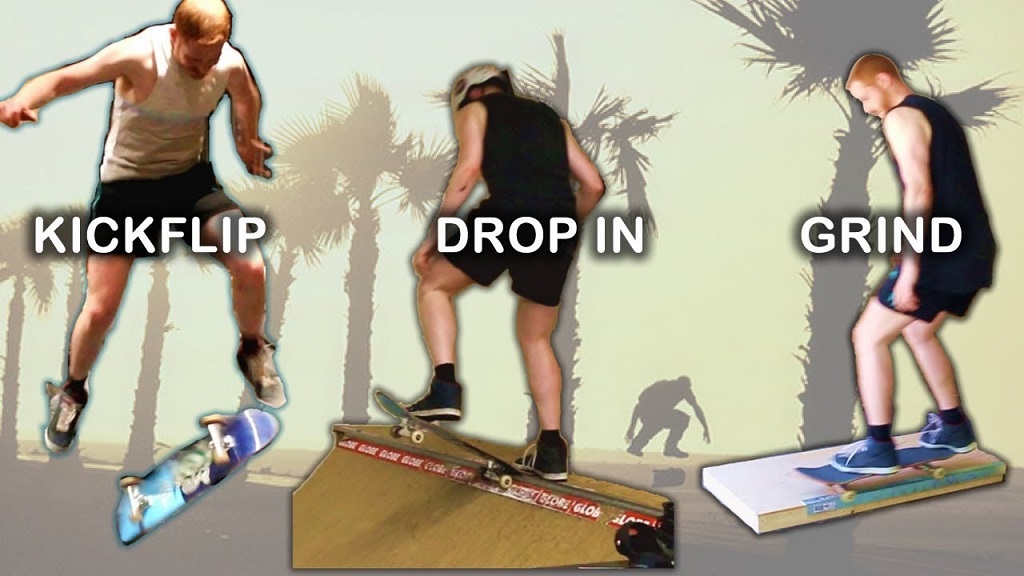
- Goals: Ollie, shuv-it, drop in on small ramps.
- Key Skills Learned:
- Stationary ollie → moving ollie
- Frontside/backside 180s
- Kickturns on ramps
- Dropping in (if skating transition)
- Challenges: Commitment issues, inconsistent landings.
Tip: Film yourself to spot mistakes. Most beginners don’t pop the tail hard enough or slide their front foot properly.
Months 4-6: Consistency & Beginner Tricks
- Goals: Land tricks consistently, try flip tricks.
- Key Skills Learned:
- Pop shuv-its
- Heelflips/kickflips (expect frustration!)
- Boardslides/50-50 grinds
- Basic ramp tricks (rock to fakie, axle stalls)
- Challenges: Fear of commitment, over-rotating flips.
Tip: Break tricks into steps. For kickflips, practice flicking the board without jumping first.
6-12 Months: Intermediate Level (Linking Tricks & Style Development)
- Goals: String tricks together, develop personal style.
- Key Skills Learned:
- Varial flips, 360 shuvs
- Grinds & slides (feeble, smith, lipslide)
- Transition tricks (airing out of quarter pipes)
- Faster, more controlled ollies
- Challenges: Plateaus, mental blocks on bigger obstacles.
Tip: Skate different terrains—street, park, and vert—to become a well-rounded skater.
1-2 Years: Advanced Tricks & Mastery
- Goals: Hardflips, tre flips, big spins, mastering gaps/stairs.
- Key Skills Learned:
- Technical flip tricks (laser flips, nollie heels)
- Handrails & bigger drops
- Consistent line execution
- Challenges: Injury prevention, refining style.
Tip: Watch pro skaters for inspiration and analyze their foot positioning.
How to Get Good at Skateboarding Faster
-
Skate Regularly (But Don’t Burn Out)
- Ideal: 4-5 sessions per week (even 30 minutes helps).
- Avoid: Long breaks—muscle memory fades.
-
Learn Proper Technique Early
Bad habits (like incorrect foot placement) slow progress. Watch tutorials and ask experienced skaters for feedback.
-
Fall Correctly (Safety = Faster Progress)
- Wear pads to reduce fear.
- Learn to roll out of falls instead of bracing with hands.
-
Set Small, Achievable Goals
Instead of “learn kickflips,” break it down:
- Day 1: Flick the board while stationary.
- Day 2: Jump while flicking.
- Day 3: Land one foot on.
-
Film & Analyze Your Tricks
Compare your form to YouTube tutorials. Common mistakes:
- Not popping enough
- Flipping too hard
- Not committing fully
-
Skate With Better Skaters
A local skatepark crew can push you to try new tricks and offer tips.
Read More Also: Allergy-Safe Buffet Party
Common Mistakes That Slow Progress
✅ Skipping Basics – Don’t rush into flip tricks before mastering ollies.
✅ Practicing Only One Trick – Mix it up to avoid frustration.
✅ Neglecting Board Control – Ride everywhere to improve balance.
✅ Avoiding Transition Skating – Even street skaters benefit from ramp skills.
Read More Also: Coffee and Its Side Effects on Women
FAQ: How Long to Get Good at Skateboarding?
Q: Can I get good at skateboarding in 3 months?
A: You can learn fundamentals (ollies, shuvs, dropping in), but mastery takes years.
Q: Why do some people progress faster?
A: Natural balance, prior board sports experience (surfing, snowboarding), and fearless commitment help.
Q: How many hours a day should I practice?
A: 30-60 minutes of focused practice beats 3 hours of unfocused skating.
Q: Is skateboarding hard to learn?
A: It’s challenging but rewarding. Falling is part of the process—embrace it!
Final Thoughts: Enjoy the Journey
Skateboarding isn’t about reaching an endpoint—it’s about progression, creativity, and fun. Some days you’ll land everything; others, you’ll struggle. Stay patient, skate often, and celebrate small wins.





+ There are no comments
Add yours