
Every muddy paw print on your floor tells the story of where your dog has been in the last few minutes. The quickest way to stop that story from spreading through your home is to clean dirty dog paws before they cross the threshold. A dog paw washer, combined with a simple entryway routine, removes mud, moisture, pollen, and debris before they reach your floors. Many owners focus on cleaning floors after the mess appears, but the real solution is preventing the mess in the first place. Whether you have hardwood, laminate, tile, or carpet, a consistent paw-cleaning routine can dramatically reduce dirt, protect flooring, and make your home easier to maintain.
Why Do Dirty Dog Paws Make Floors So Hard to Keep Clean?
Direct answer: Dirty dog paws collect mud, dust, grass, road salt, bacteria, and moisture outdoors and transfer them directly onto indoor surfaces.
Dogs explore the world through parks, sidewalks, trails, and backyards. Their paw pads naturally trap debris. During wet weather, dirt sticks even more easily, creating muddy tracks throughout the house. This can lead to stained carpets, scratched hardwood, and extra cleaning time.
What Is the Best Way to Clean Dog Paws After Every Walk?
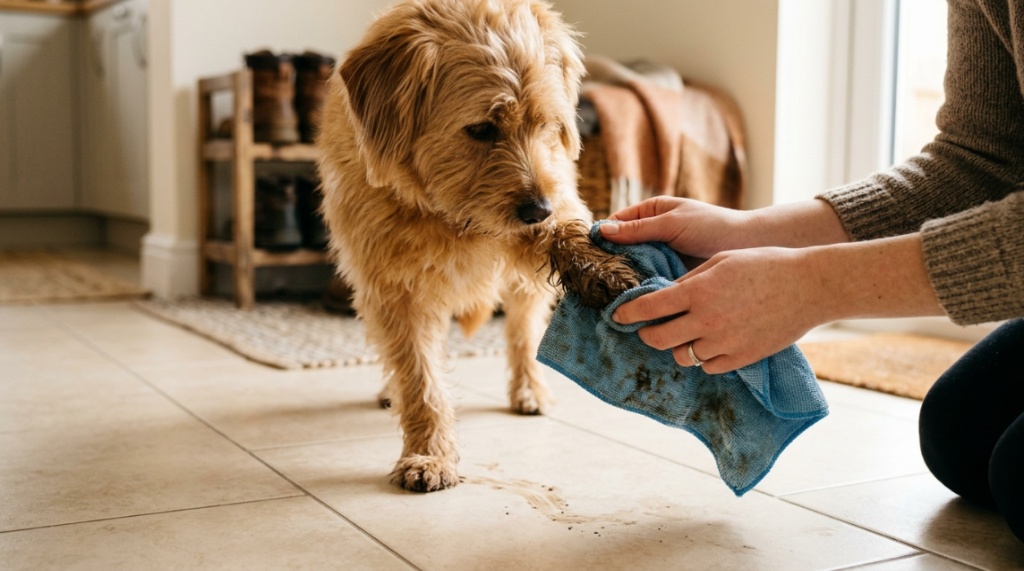
Direct answer: Use a dog paw washer at the door, dry the paws thoroughly, and inspect them before allowing your dog inside.
Creating a dedicated cleaning station is the simplest long-term solution. Many dog owners use a paw-cleaning tool designed for muddy conditions because it helps remove dirt quickly and consistently.
- Stop at the entrance.
- Check each paw.
- Use a dog paw washer.
- Dry with a microfiber towel.
- Reward your dog.
How Does a Dog Paw Washer Work?
Direct answer: A dog paw washer uses soft silicone bristles and water to loosen and remove dirt trapped between paw pads.
The process takes less than a minute for most dogs. Place the paw into the washer, rotate gently, remove, and dry. This simple habit prevents a surprising amount of dirt from entering the home.
What Should You Keep Near the Door?
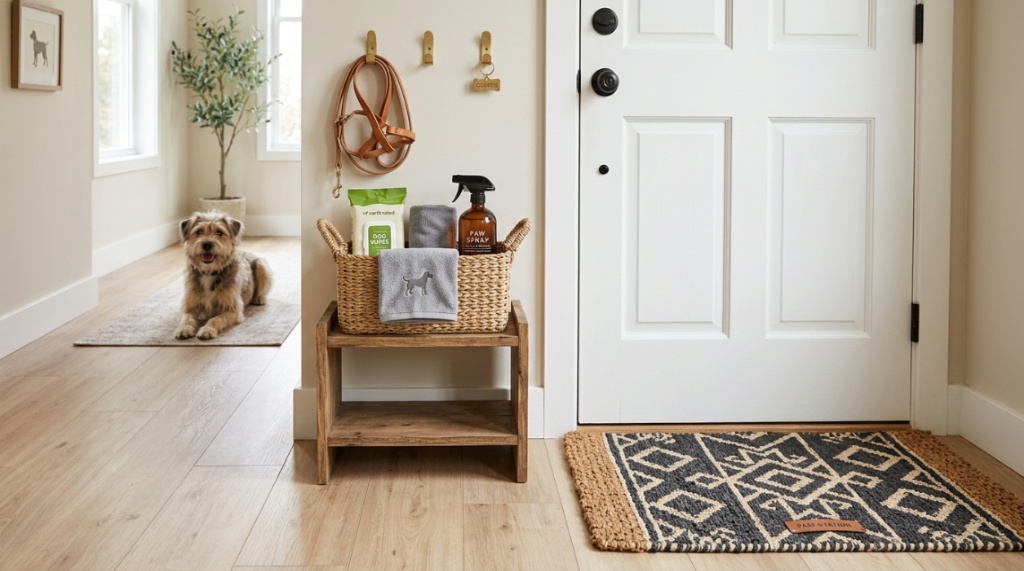
Direct answer: Keep a cleaning station with mats, towels, wipes, and a dog paw washer.
A well-designed entryway can reduce cleaning work throughout the house. Many pet owners also learn practical dog safety habits for homes and public spaces to create a safer and cleaner environment.
| Item | Purpose |
|---|---|
| Outdoor Mat | Removes loose dirt |
| Indoor Absorbent Mat | Captures moisture |
| Dog Paw Washer | Deep cleans paws |
| Microfiber Towel | Dries paws quickly |
How Can You Prevent Muddy Paw Prints During Rainy Weather?
Direct answer: Avoid muddy routes when possible and clean paws immediately after returning home.
Rain makes dirt stick to paws more easily. Walking on paved paths, trimming fur around paw pads, and keeping towels by the door can significantly reduce messes.
Should You Use Paw Wipes or a Dog Paw Washer?
Direct answer: Paw wipes are convenient, but a dog paw washer usually provides a deeper clean.
| Method | Cleaning Power | Convenience |
|---|---|---|
| Paw Wipes | Moderate | High |
| Wet Towel | Moderate | High |
| Dog Paw Washer | High | High |
Can Dirty Dog Paws Affect Indoor Air Quality?
Direct answer: Yes. Dirty dog paws can carry pollen, dust, mold spores, and other outdoor contaminants into the home.
For families with allergy sufferers, cleaning paws can help reduce exposure to common environmental allergens.
How Often Should Floors Be Cleaned in Dog-Friendly Homes?
Direct answer: High-traffic areas should be cleaned multiple times per week, while entryways may need daily attention.
- Vacuum high-traffic areas regularly.
- Wash mats frequently.
- Mop hard floors as needed.
- Clean paws after every walk.
What Daily Habits Keep Floors Cleaner Long-Term?
Direct answer: Consistency matters more than deep cleaning.
- Use a dog paw washer after walks.
- Inspect paws before entry.
- Keep cleaning supplies near the door.
- Trim excess paw fur.
- Maintain a regular floor-cleaning schedule.
Conclusion
The simplest way to keep floors clean after every dog walk is to stop dirt before it enters the home. A dog paw washer, absorbent mats, and a consistent cleaning routine can dramatically reduce muddy paw prints, allergens, and debris. Instead of constantly cleaning floors, focus on preventing messes at the door. If you’re looking for tools that make the process easier, explore practical paw-cleaning solutions for dog owners. Small habits performed every day can protect your floors, reduce cleaning time, and keep your home looking its best.
FAQ
How do I clean muddy dog paws quickly?
Use a dog paw washer followed by a microfiber towel to remove dirt and moisture before your dog enters the house.
Is a dog paw washer worth buying?
Yes. It can save time, reduce messes, and help protect flooring from dirt and moisture.
Can dirty dog paws damage hardwood floors?
Yes. Sand, grit, and moisture can contribute to scratches and long-term wear.
Should I clean my dog’s paws after every walk?
Yes. Regular cleaning helps remove dirt, allergens, and bacteria.
Do paw wipes work as well as paw washers?
Paw wipes are convenient but usually do not clean as thoroughly as a paw washer.
How can I stop muddy paw prints during rainy weather?
Use mats, clean paws immediately, and avoid muddy routes whenever possible.


+ There are no comments
Add yours