

What Are the Biggest Mistakes to Avoid When Buying a Fish Finder?
Avoid buying based on price alone, ignoring your fishing environment, or overlooking essential features. These mistakes can lead to frustration and wasted money.
Here are the top 5 mistakes anglers make:
- Choosing based on price only: A cheap fish finder might save you money upfront, but it could lack the accuracy, durability, or features you need. On the other hand, the most expensive model isn’t always the best fit for your needs.
- Ignoring your fishing environment: A fish finder designed for freshwater lakes won’t perform well in deep saltwater. Consider where and how you’ll use it.
- Skipping the transducer: The transducer is the heart of your fish finder. A poor-quality transducer will give you poor results, no matter how good the display is.
- Not checking compatibility: If you’re mounting the fish finder on a kayak, boat, or ice rig, ensure it’s compatible with your setup.
- Overlooking user reviews: Real-world feedback from other anglers can reveal issues that aren’t obvious from the specs alone.
How Do I Choose the Right Fish Finder for My Fishing Style?
Match the fish finder to your fishing type—freshwater, saltwater, ice, or kayak—to get the best performance. Each environment has unique demands.
| Fishing Type | Recommended Features | Best Fish Finder Type |
|---|---|---|
| Freshwater (Lakes, Rivers) | CHIRP sonar, high resolution, GPS | Portable or fixed mount |
| Saltwater (Ocean, Bay) | Dual-frequency, corrosion-resistant, deep-water capability | Fixed mount with saltwater-rated transducer |
| Ice Fishing | Portable, battery-powered, flasher display | Ice-specific or portable fish finder |
| Kayak Fishing | Compact, portable, easy to mount | Portable or castable fish finder |
People also ask: Can I use a freshwater fish finder in saltwater?
Not recommended. Saltwater can corrode freshwater-rated transducers and affect performance. Always choose a saltwater-compatible model for ocean fishing.
What Features Should I Look for in a Fish Finder?
Prioritize CHIRP sonar, GPS, screen resolution, and transducer quality for the best experience. These features ensure accuracy, ease of use, and durability.
Must-Have Features
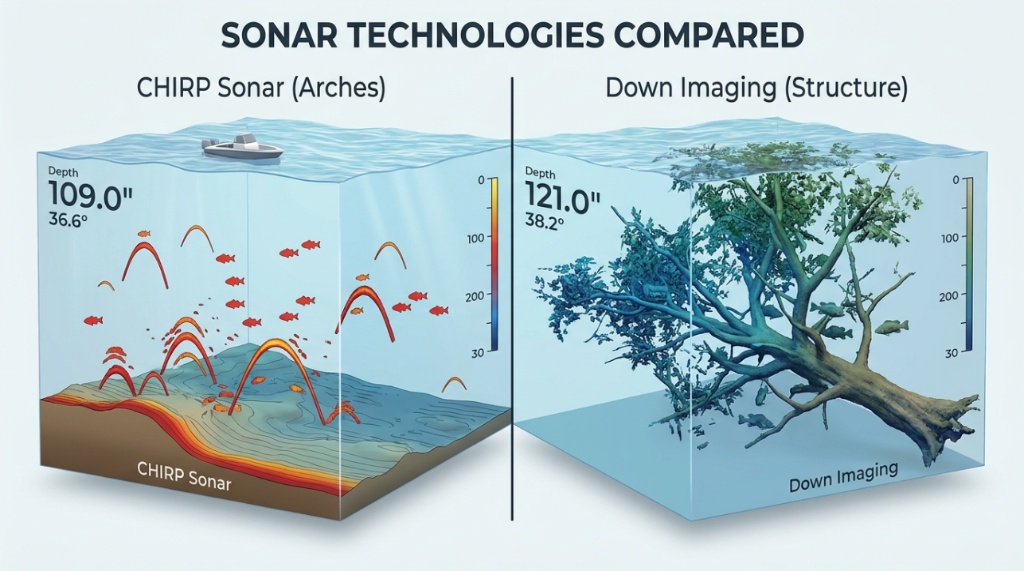
- CHIRP Sonar: Provides clearer, more detailed images of fish and structures. Better than traditional sonar for identifying fish sizes and shapes.
- GPS: Helps you mark fishing spots, create maps, and navigate. Essential for open water or unfamiliar areas.
- High-Resolution Display: A screen with at least 480×480 pixels ensures you can see details clearly, even in bright sunlight.
- Transducer Quality: Look for a transducer with multiple frequencies (e.g., 50/77/200 kHz) and a wide cone angle for versatility.
- Battery Life: For portable models, choose one with long battery life (10+ hours) or the option to use external power.
Nice-to-Have Features
- Side Imaging/Down Imaging: Provides a detailed, picture-like view of the underwater terrain and fish.
- Wireless Connectivity: Allows you to sync with your phone or tablet for remote viewing and control.
- Temperature Sensor: Measures water temperature, which can help you locate fish that prefer specific temperature ranges.
- Networking Capabilities: Lets you connect multiple fish finders or share data with other devices on your boat.
Selecting the right marine electronics depends entirely on how and where you fish. If you regularly navigate shallow flats or small rivers, your equipment needs will look vastly different than someone trolling deep offshore waters. For instance, stability and weight capacity dictate your entire setup if you are rigging a specialized watercraft like a Kayak for Heavy Person Fishing, where every square inch of console space matters and power consumption must be kept to a minimum. Matching your sonar’s transducer mount and beam angle to your specific hull type is the single best way to ensure you don’t end up with a useless piece of hardware.
How Much Should I Spend on a Fish Finder?
Budget between $100 and $2,000, depending on your needs and fishing style. Here’s a breakdown of what to expect at different price points:
| Price Range | Features | Best For |
|---|---|---|
| $100–$300 | Basic CHIRP, portable, small screen | Beginners, kayak fishing, occasional use |
| $300–$800 | CHIRP, GPS, mid-sized screen, better resolution | Intermediate anglers, freshwater/saltwater |
| $800–$1,500 | High-end CHIRP, Side/Down Imaging, large screen, networking | Serious anglers, tournament fishing |
| $1,500+ | Premium CHIRP, 3D imaging, multiple transducers, advanced networking | Professionals, commercial fishing |
Pro tip: If you’re on a tight budget, consider a portable fish finder like the Deeper PRO+ or a mid-range model like the Garmin Striker 4. Both offer great value for the price.
What Do Fish Finder Reviews Say About the Best Models?
Top-rated fish finders consistently receive praise for accuracy, ease of use, and durability. Here’s what users are saying about some of the best models:
Top-Rated Fish Finders Based on Reviews
| Model | Average Rating | Pros | Cons |
|---|---|---|---|
| Garmin Striker Plus 7sv | 4.8/5 | CHIRP + SideVu, GPS, easy to use | Screen could be brighter |
| Lowrance HOOK Reveal 9 | 4.7/5 | CHIRP + DownScan, high resolution | Expensive |
| Humminbird HELIX 7 CHIRP GPS G3 | 4.9/5 | Side Imaging, GPS, durable | Complex for beginners |
| Deeper PRO+ | 4.6/5 | Portable, wireless, great for kayaks | Limited depth range |
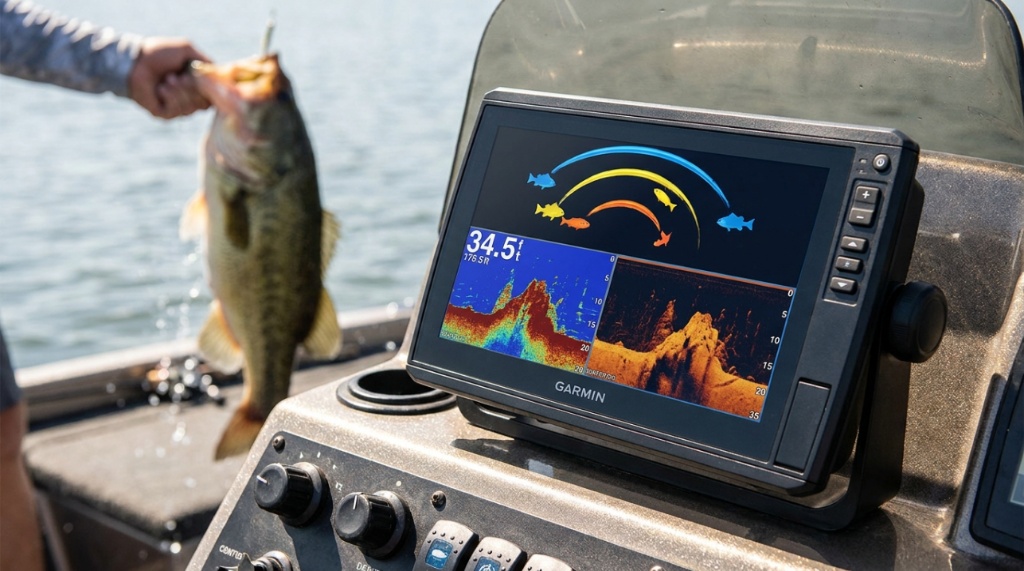
For more insights, check out fish finder reviews to see what other anglers recommend.
Frequently Asked Questions
Can I use a fish finder without a boat?
Yes! Portable and castable fish finders like the Deeper PRO+ or Vexilar SP200 are designed for shore fishing. Simply cast the transducer into the water and read the data on your phone or the device’s display.
How do I know if a fish finder is easy to use?
Look for models with intuitive menus, touchscreens, and clear displays. Brands like Garmin and Humminbird are known for user-friendly interfaces. Reading user reviews can also give you a sense of how easy a model is to operate.
Are there fish finders that work with my smartphone?
Yes! Many portable fish finders, such as the Deeper PRO+ and iBobber, connect to your smartphone via Bluetooth or Wi-Fi. These models display data on an app, making them convenient and easy to use.
What’s the difference between CHIRP and traditional sonar?
CHIRP sonar uses a continuous sweep of frequencies, while traditional sonar uses a single frequency. CHIRP provides better resolution, clearer images, and the ability to distinguish between fish and other objects more effectively.
Do I need a fish finder with GPS?
It depends on your fishing style. GPS is essential for open water or unfamiliar areas, as it helps you mark productive spots and navigate safely. For shore or small lake fishing, GPS may not be as critical.







+ There are no comments
Add yours