
You finally open your garage door, ready to grab your board for a sunset cruise around the neighborhood, only to trip over a deck, get tangled in a leash, or find your prized cruiser scratched up from being tossed in a corner. Garage storage in Texas presents unique challenges—from the sweltering summer heat and humidity to the occasional dust storm and cramped spaces that weren’t designed for hobby gear. If you’re tired of your boards taking up floor space or getting damaged, wall storage is the solution. This guide covers everything you need to know about choosing and installing the best Texas skateboard wall mount for your specific garage conditions.
What Makes a Texas Garage Different for Skateboard Storage?
Extreme Temperature and Humidity Fluctuations
Texas garages are not climate-controlled. In the summer, interior garage temperatures can easily exceed 120°F. In the winter, they can drop below freezing. This constant expansion and contraction affects wood decks, glue laminates, and grip tape. Wall-mounted storage that keeps boards off the concrete floor helps mitigate moisture wicking from the slab, but you also need a mount that won’t warp or crack under these thermal stresses. Look for mounts made from powder-coated steel or high-grade aluminum rather than cheap plastic or untreated wood.
Space Constraints and Multi-Use Garages
Many Texas homes have garages that double as workshops, home gyms, or overflow storage. Floor space is premium real estate. Vertical wall storage is your best friend here. By mounting boards flat against the wall or vertically, you reclaim the floor area for parking, tools, or that treadmill you swore you’d use. A Texas skateboard wall mount system designed for wall use can hold multiple boards while keeping them easily accessible without the clutter.
Dust and Debris Exposure
Garages in Texas are notoriously dusty, especially in dry regions like West Texas or during allergy season in the Hill Country. Open shelving lets grit settle on grip tape and bearings. Wall mounts that allow boards to hang vertically or horizontally without contact surfaces that trap dirt are ideal. Some mounts even have protective rubber padding to prevent scuffing while keeping the board elevated away from sweeping dust clouds.
How to Choose the Best Wall Mount for Your Skateboard
Weight Capacity and Board Type
Not all skateboards weigh the same. A standard popsicle deck weighs around 3–5 pounds, but a longboard or electric skateboard can weigh 12–20 pounds. Before buying any mount, check its weight rating. Most budget-friendly mounts handle 10–15 pounds per board, while heavy-duty offerings can support up to 50 pounds. If you own an electric board like a Boosted or Meepo, you need a mount with reinforced brackets and wider truck cradles.
Mounting Material and Durability
You want a mount that can withstand Texas garage conditions without rusting, cracking, or losing grip. Steel mounts with a powder-coated finish resist corrosion from humidity. Aluminum offers excellent strength-to-weight ratios and won’t rust. Avoid anything labeled “ABS plastic” or “polycarbonate” unless it’s a reinforced composite rated for heavy loads—cheap plastic becomes brittle in extreme heat and may snap when you hang a board.
Installation Method and Wall Type
Texas garages are usually built with drywall over wooden studs or masonry block walls. If you have drywall, you must anchor into studs for safety. Masonry requires concrete anchors or toggle bolts. Look for mounts that include all necessary hardware. Many modern mounts use a simple two-screw system that lines up with standard stud spacing (16 inches on center). Self-tapping concrete screws are ideal for cinderblock or poured concrete walls common in newer construction.
What Are the Different Types of Skateboard Wall Mounts?
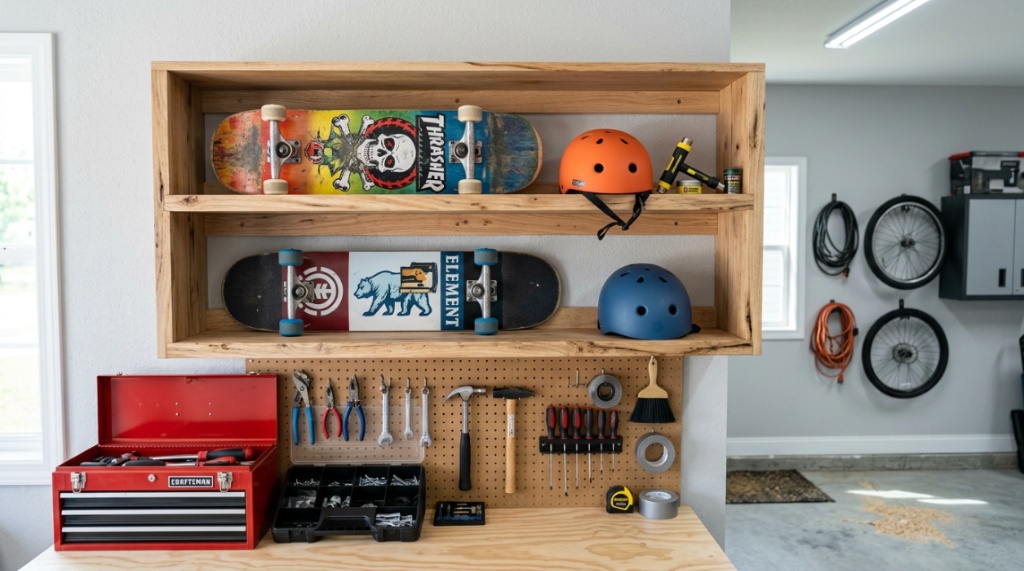
Horizontal Rail Mounts
These consist of two padded metal arms that cradle the trucks of the board. The board sits horizontally, parallel to the wall. This is the most common style and works well for any board length. Pros include easy one-handed mounting and dismounting, and the board displays nicely for show. Cons are that they take up more horizontal wall space—about 36 inches per board—and longer longboards may require spacing adjustments.
Vertical Hanging Mounts
Vertical mounts hold the board by one truck, allowing it to hang straight down. This is excellent for tight spaces where horizontal width is limited. You can stack multiple boards vertically in a small footprint. However, the board swings slightly, so ensure the mount has a locking mechanism or rubber grips. Vertical storage also hides the graphic, which matters if you want to display your deck art.
Magnetic Wall Mounts
These use heavy-duty neodymium magnets embedded in a slim bracket that attaches to the wall. You simply place the truck near the magnet and it locks in place. Magnetic mounts are incredibly sleek and allow for quick access. The downside is that they must be perfectly aligned, and they won’t hold boards with non-ferrous truck materials (like titanium or certain aluminum alloys). They’re best for standard steel trucks.
DIY Pallet and Wood Rack Options
Some Texas skaters build their own racks from reclaimed pallet wood or 2x4s. These are cheap and customizable but require strong DIY skills and proper treatment to prevent splintering and moisture damage. If you go this route, sand everything smooth, apply a weather-resistant sealant, and anchor securely into studs. DIY racks work great for multiple boards but lack the polished look of commercial mounts.
Which Type of Wall Mount Is Best for Longboards vs. Cruisers vs. Electric Boards?
Longboards (35–50 inches)
Standard horizontal mounts often can’t accommodate longboard length. Look for extra-wide cradles or adjustable mounts that allow the arms to slide outward. Some mounts come with extension bars. Vertical hanging is actually easier for longboards because they naturally balance when hanging by the rear truck. Just ensure the mount is rated for the extra weight (10–15 pounds for most longboards).
Cruisers and Mini Cruisers (22–30 inches)
These smaller boards need mounts with tighter cradle spacing. A standard mount designed for 32-inch decks leaves the trucks too far apart for a mini cruiser, resulting in wobble. Adjustable mounts or those with rubber grip pads work best. Some mounts have interchangeable arms to accommodate different truck widths. Always check the minimum board length the mount supports.
Electric Skateboards
Electric boards are heavier and have thicker decks to house batteries. Never use plastic or lightweight mounts. You need steel or aluminum brackets rated for at least 25–30 pounds. Additionally, the mount must not pinch or stress the battery housing. Look for mounts with wide foam padding that distributes pressure evenly. Some electric board owners prefer horizontal mounts where the board sits flush against the wall to prevent the battery from dangling.
How to Install a Skateboard Wall Mount in a Texas Garage
Step 1: Locate Your Wall Studs
Use a stud finder to mark the center of your wall studs. Texas garage walls often have metal studs in newer builds—you’ll need toggle bolts for those. For wood studs, mark 16-inch intervals. If you’re mounting to concrete block, use a masonry bit and plastic expansion anchors. Never rely solely on drywall anchors for heavy boards; they will pull out, especially in heat-expanding conditions.
Step 2: Mark and Drill Pilot Holes
Hold the mount against the wall at your desired height (typically 48–54 inches from the floor). Use a level to ensure it’s straight. Mark the screw holes with a pencil. Drill pilot holes slightly smaller than your screws. For concrete, drill 1/4 inch deeper than the anchor length to allow for dust buildup. Clean out the dust with compressed air or a vacuum before inserting anchors.
Step 3: Secure the Mount and Test
Drive the screws into the anchors or studs. If using toggle bolts, insert the toggle through the bracket, then push through the hole and tighten. Hand-tighten until snug—over-tightening can strip threads or crack drywall. Give the mount a firm tug. Hang a board and give it a gentle shake. A properly installed mount should not wiggle or move when you remove the board. If it does, add additional screws or move to a stud.
Why Should You Mount Skateboards Vertically vs. Horizontally?
Space Efficiency in Tight Garages
Vertical mounting uses only about 8–10 inches of horizontal wall space per board. This is ideal if you have multiple boards or share the garage with bikes, tools, and lawn equipment. Horizontal mounting spreads boards out—a single longboard takes 3 feet of wall width. In a one-car garage, vertical storage can double your board capacity without crowding.
Display and Aesthetic Considerations
Horizontal mounts showcase the deck’s graphic, making them preferred for collectors or riders who love their board art. Vertical mounts hide the artwork, which may matter less for daily riders. If you have a mix of boards, consider a combo: horizontal for show boards, vertical for the ones you grab every day.
Accessibility and Ease of Use
Vertical mounts allow you to grab a board with one hand and go—great for quick skate sessions. Horizontal mounts require you to slide the board out from the cradles, which can be slightly more awkward if the mount is high. For kids or shorter family members, vertical mounts at a lower height are easier to reach.
Can You Use a Surfboard Wall Rack for Skateboards?
Yes, With Modifications
Surfboard racks are designed for bulkier, heavier boards and usually have wider arms. They can work for longboards and electric skateboards. However, standard skateboards may slip through the arms because they are too narrow. You can add foam padding or rubber strips to tighten the grip. Surf racks also tend to be more expensive and take up more space than dedicated skateboard mounts.
Why a Dedicated Skate Mount Is Better
Dedicated skateboard mounts have truck-specific cradles that hold the board securely without damaging the grip tape or deck edges. They are sized for standard truck widths (about 8–10 inches). Surfboard racks, even with padding, may put pressure on the deck itself rather than the trucks, potentially causing warping over time. For occasional use, a surf rack works. For daily storage, buy a proper skateboard mount.
What Tools Do You Need for Installation?
Essential Tools
- Stud finder (or strong magnet)
- Electric drill with drill bits (wood and masonry)
- Level (at least 24 inches long)
- Screwdriver or impact driver
- Tape measure
- Pencil for marking
Optional but Helpful
- Rubber mallet (for tapping anchors)
- Vacuum or compressed air (for cleaning concrete holes)
- Safety glasses and dust mask
- Torque wrench (if using heavy-duty concrete anchors)
Tips for Avoiding Common Installation Mistakes
Always measure twice and drill once. Check for wires inside the wall before drilling deep holes. If you’re unsure about stud location, drill a small pilot hole and use a wire coat hanger to probe. For concrete walls, buy high-quality carbide-tipped masonry bits—they’re worth the extra cost. Never use drywall screws to mount a skateboard rack; they shear easily.
How to Maintain Your Wall Mount and Skateboards in Texas Heat
Inspect Mounts Every 60 Days
Texas temperature swings can loosen screws. Every two months, check that all bolts are tight. Re-torque if needed. Look for signs of rust on steel mounts—surface rust can be sanded and repainted with spray enamel. If you see deep pitting or cracked welds, replace the mount immediately to avoid board damage or injury.
Keep Boards Clean Even When Stored
Dust settles on everything in a garage. Wipe down your grip tape with a soft brush or compressed air before putting the board away. This prevents grit from grinding into bearings. Once a month, remove wheels and bearings, clean them, and apply lightweight lubricant. Storing boards on wall mounts keeps them off the floor but doesn’t eliminate dust entirely.
Consider a Garage Fan or Dehumidifier
If you store valuable boards (custom completes, vintage decks, or electric boards), a small dehumidifier in the garage helps control moisture. Even a simple box fan running on low improves air circulation, reducing the risk of mold growing on grip tape or deck wood. This is especially important along the Gulf Coast from Houston to Corpus Christi.
Where Should You Position the Wall Mount in Your Garage?
Away from Direct Sunlight
If your garage has windows or a side door, avoid mounting boards where direct sunlight hits them for extended periods. UV rays fade grip tape colors and can weaken the epoxy holding the deck layers together. North-facing walls or walls shaded by the house are best. If sunlight is unavoidable, consider a UV-blocking window film.
Near the Man Door or Garage Door
Position mounts close to your entry point for convenience. If you park in the garage, mount boards near the man door so you can grab one as you leave. If you use the garage as a workshop, mount them above your workbench to keep them out of the way but visible. Avoid mounting directly behind a parked car where you might bump the board while reversing.
Out of Reach of Small Children and Pets
If you have kids or dogs, mount boards at least 48 inches high. A falling board can injure a toddler, and pets may chew grip tape or wheels. Also, ensure the mount doesn’t protrude into walking paths where someone could hit their head or shoulder. In tight garages, consider corner mounting to minimize obstruction,
When organizing your space, consider the specific size and weight of your setup. Premium setups and larger decks require sturdier anchors than standard entry-level completes. If you are currently setting up storage for a younger rider or testing out the WhiteFang 31 Beginner Skateboard, a simple, lightweight horizontal wall bracket will easily do the trick without overloading your drywall.
Frequently Asked Questions
Can I store a skateboard in a Texas garage year-round?
Yes, with proper wall storage. The key is keeping boards off the concrete floor to avoid moisture damage, and using a sturdy wall mount that can handle temperature swings. Dehumidifiers and fans help protect expensive decks.
How much weight can a typical wall mount hold?
Most standard skateboard wall mounts hold between 10 and 15 pounds per board, which covers most longboards and all standard skateboards. Heavy-duty mounts for electric boards often hold 25–50 pounds. Always check the manufacturer’s rating.
Do I need to drill into studs for a skateboard mount?
Yes, whenever possible. Drywall anchors can pull out over time, especially in hot garages. Studs provide the strongest hold. For concrete walls, use expansion anchors rated for at least 50 pounds.
What’s the best mount for an electric longboard?
Look for a steel or aluminum mount with wide padded arms rated for at least 25 pounds. Horizontal mounts that cradle the trucks work best to prevent the battery housing from dangling. Avoid narrow or cheap plastic racks.
Can I mount multiple skateboards on one rack?
Some racks are designed to hold 2–4 boards side by side. If you have multiple boards, consider a modular system where each mount holds one board and you can space them along a wall. Stacking vertically also helps fit many boards in a small area.
Will my skateboard graphic get damaged from wall storage?
Not if you use a mount with padded rubber or foam cradles. The mount should only contact the trucks, not the deck itself. Avoid mounts that pinch the deck sides, as these can leave marks or cause pressure dents.
How often should I check the mount for tightness?
Check every 60 days, especially after extreme temperature swings. Use a screwdriver to ensure bolts are snug. If you notice wobble, address it immediately to prevent the board from falling.
Conclusion
Storing skateboards on Texas garage walls is not just about reclaiming floor space—it’s about protecting your gear from the intense local climate and keeping your boards ready to ride at a moment’s notice. By choosing a mount that suits your board type, installing it securely into studs or concrete anchors, and positioning it away from direct sunlight and high-traffic areas, you create a permanent solution that works year-round. Whether you prefer horizontal display racks that show off deck art or vertical hangers that maximize space, the right approach makes a noticeable difference in organization and board longevity. Start by assessing your garage wall space and the weight of your boards, then pick a mount that fits your lifestyle. A few minutes of proper installation will save you years of frustration and protect your investment in every ride.










+ There are no comments
Add yours